
3 Simple Steps for Diffusing Innovation
Leadership Contingency 5 - Challenging Mindsets

Faculty Leadership is …
In a recent LinkedIn post, I described team leadership as a tough gig, listing a number of the challenges for Faculty Leaders, as found by researchers Anthony Thorpe and Gay Bennett-Powell:
· Lack of confidence in holding team to account
· Guiding and directing more senior team members.
· Being accountable for the team and getting them to accept responsibility.
· Tension between middle leaders accountability & accountability of those they lead
· Managing disparately located teams and unfamiliar subject areas
· How to be diplomatic in leading
If you have ever led a team, you may recognise some of these challenges. While domain-specific expertise as a curriculum leader is essential – what I frame as the Professional Dynamic – the points above address a distinct facet: the Human Dynamic. Managing the Human Dynamic entails understanding and engaging with various teacher mindsets, a critical aspect of effective leadership. And one of the most challenging mindsets is that of those who are resistant to change.
In my previous articles on Faculty Leadership, discussions have focussed on Leadership Contingencies for Faculty Leaders - behaviours or actions that are essential for Faculty Leaders to develop in a school-based context. Having explored the challenges of being the Sandwiched Negotiator, the importance of a Mediated Vision, the steps towards Uncontrived Collegiality, and how to accept your responsibility as the Faculty Inspector, let's delve into Leadership Contingency 5: Challenging Mindsets.

Case Study: The Master Resistor Mindset
Consider the example of some teachers who, having refined their teaching practices over several years, become resistant to innovation. Why? Often, because change signifies an additional investment of time – a commitment they may be reluctant to make. They may perceive their current practice as effective and see their resistance to change as quite rational. From their perspective, having 'completed' significant professional learning in earlier stages of their career, they perceive the Faculty Leader's demand for change as excessive. More importantly, they might believe your innovation to be of low or no impact. These individuals, or 'Master Resistors', can slow faculty progress and are often adept at rationalising the status quo. For Faculty Leaders, managing Master Resistors can be a significant challenge.
In my early teaching years, I assumed Master Resistors were predominantly teachers nearing the end of their career, trying to reach retirement by remaining inconspicuous and avoiding change. However, after much collaborative work with colleagues over the years, I've come to understand resistance as a mindset rather than something that automatically happens at the late career stage. For example, I observed a retired colleague who, despite being out of full-time teaching, continued to listen to education podcasts, collaborate with others, and showed a keen interest in gaining fresh insights into their practice. He embodied a mindset of growth and innovation throughout his career that continued even into his retirement.
With that in mind, here are three steps to introducing innovation if you have one or more Master Resistors in your team:
1. Stage 1 - Choose the path of least resistance
Begin with team members who are open to innovation. The Diffusion of Innovation Theory suggests change is adopted in a time sequence or predictable pattern. It categorises individuals into groups - innovators, early adopters, early majority, late majority, and laggards - based on the sequence and speed of their adoption of the innovation. So, focus initially on the 16% (perhaps just one member of your team) that are innovators or early adopters.
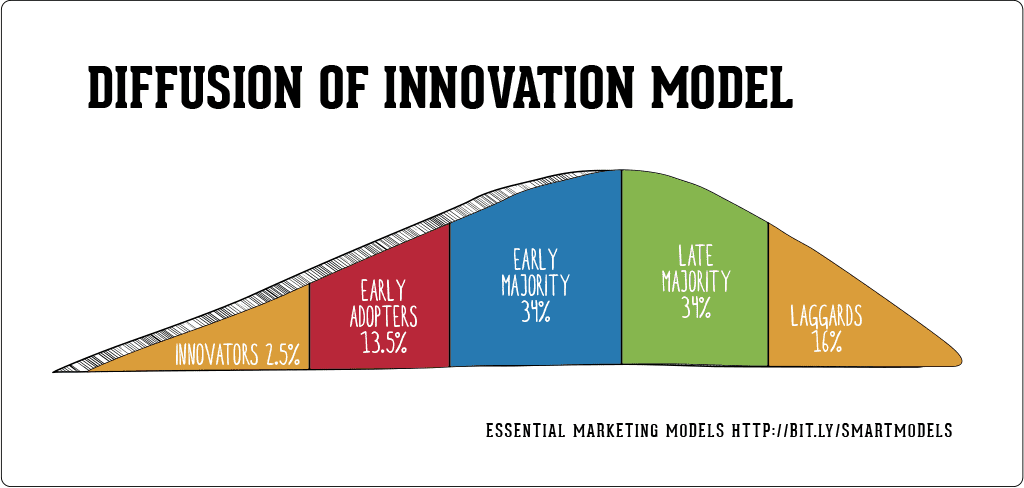
Give the rest of the team regular updates on your progress and ask for feedback from everyone, including Master Resistors, at faculty meetings. Genuinely incorporate this feedback to make iterative improvements, because your approach won’t be perfect. Remember, even though there may only be a couple of you implementing this new approach, ‘it takes a team to innovate’:
[The character of confident leaders] reflects a growth mindset whereby they appear keen to overcome their personal limitations, to learn from alternative points of view, even criticism, and find lessons and inspiration from the success of others.
Branson and Marra (2019)
2. Stage 2 - Demonstrate the Effectiveness of the Innovation:
If the innovation doesn't yield positive results, your colleagues are justified in their resistance. However, if the innovation works – or could work better with a few tweaks – resistance should decrease. Share data, invite colleagues into your class, and provide materials for them to experiment with on a smaller scale – all with the aim of demonstrating effectiveness. Again, encourage feedback and continually iterate to improve.
3. Stage 3 - Facilitate Easy Adoption of the Change:
Change is more readily accepted when the groundwork has been laid. If you and the early adopters have tested a new strategy, and made improvements based upon regular feedback at faculty meetings, the path to change will be much smoother for the rest of the team. In particular, if they can use the resources that you have developed - offering a ready made PowerPoint might be all you need to overcome any resistance. It really can be as simple as that!
Concluding Thoughts
Leading change and innovation in a faculty context is no small feat. It requires recognising and managing varied mindsets, particularly the Master Resistor mindset. As faculty leaders, we can apply a simple three-stage process: beginning with those open to change, demonstrating the effectiveness of the innovation, and facilitating easy adoption. This approach not only leverages the Diffusion of Innovation Theory but also builds on teamwork, collaboration, and a shared vision.
Understanding and managing resistance to change is a vital component of effective Faculty Leadership. By carefully navigating this path, even the most resistant team members can become allies in the journey of innovation and improvement. Remember, resistance is not an insurmountable obstacle, but rather a challenge to be understood, engaged with, and ultimately overcome.
References / Further Reading
Bennett, N. Newton, W. Wise, C. Woods, P. (2007). Understandings of middle leadership in secondary schools: a review of empirical research. School Leadership & Management. 27:5, 453-470.
Branson, C. M. & Marra, M. (2019). Leadership as a relational phenomenon: What this means in practice. Research in Educational Administration & Leadership, 4 (1), 81-108.
Brundrett, M & Irvine, P. (2016). Middle Leadership and its Challenges: a case study in the secondary independent sector. Management in Education, 30:2, 86–92.
Jarvis, A. (2008). Leadership lost: A case study in three selective secondary schools. Management in Education, 22:1, 24-30.
Turner, C. (2003). A Critical Review of Research on Subject Leaders in Secondary Schools. School Leadership & Management. 23:2, 209-227.